
Stories
20 Tips You Need to Know Before Going on a Safari
Adventis · 22 October 2026
A little insider knowledge can turn a good safari into the adventure of a lifetime.
There's something extraordinary about an African safari. The anticipation of your first lion sighting, the silence of the bush at sunrise, the rumble of elephants walking past your vehicle, and the feeling that you're witnessing nature exactly as it was meant to be experienced.
But there are a few things worth knowing before you go. From choosing the right season to making the most of your time in the wilderness, these 20 tips will help you get more out of your African safari.
1. The Great Migration: Plan Your Trip Around It
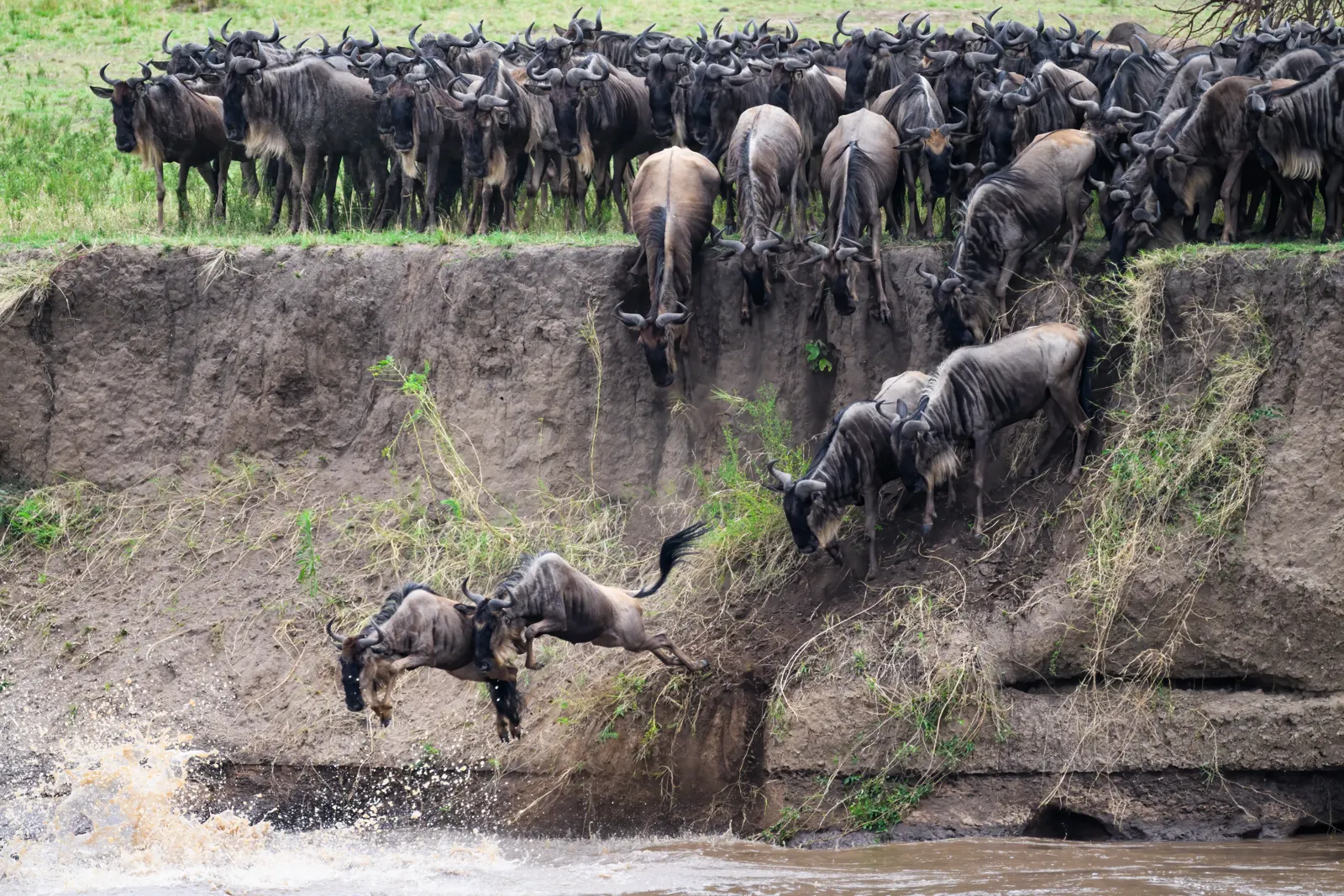
The Great Migration is one of the most awe-inspiring wildlife spectacles on Earth. Around 1.5 million wildebeest, accompanied by hundreds of thousands of zebras and gazelles, move through the Serengeti in Tanzania and the Maasai Mara in Kenya in an ongoing search for fresh grazing and water.
The herds follow a continuous seasonal cycle, influenced by rainfall and the availability of grass. Calving typically takes place in the southern Serengeti around January and February, while the famous Mara River crossings generally occur between July and October, although timing varies each year.
Here's our tip: If witnessing the Great Migration is the highlight you've been dreaming about, consider saving it for the grand finale of your safari. After watching thousands of wildebeest thunder across a river, complete with crocodiles and predators waiting nearby, some other wildlife experiences might feel a little less dramatic by comparison!
Of course, this depends on your itinerary, the season and where you're travelling. The most important thing is to position yourself in the right area at the right time. The migration is a moving spectacle, not a scheduled event, so no sighting can ever be guaranteed.
You'll find a month-by-month migration chart below to help you understand the typical movement of the herds.
2. Dry Season vs. Green Season: Which Is Better?
If your priority is spotting wildlife, the dry season is often the best choice. As vegetation thins and water sources become scarce, animals tend to gather around permanent rivers and waterholes, making them easier to find.
In many southern African safari destinations, the dry season generally falls between May and October. In East Africa, the main dry season is often June to October, although seasonal patterns differ by region.
But don't dismiss the green season! After the rains, landscapes burst into life, migratory birds arrive, newborn animals appear, and the scenery becomes wonderfully lush. There may be fewer visitors, and some lodges offer more attractive rates.
The trade-off? Tall grass and thicker vegetation can make animals harder to spot, and heavy rain may affect road conditions or access to certain areas.
Our advice: Choose the season according to what matters most to you. Excellent wildlife viewing isn't limited to the dry months, and the best time to visit depends on your destination and the experiences you're hoping for.
3. Research Your Favourite Animals
Have a favourite animal you've always dreamed of seeing? Do your research before choosing your destination.
Africa is enormous, and wildlife isn't distributed evenly across the continent. Gorillas live in specific rainforest habitats in countries such as Uganda and Rwanda. Cheetahs favour particular open habitats, while certain antelope species and birds are found only in specific regions.
Even within one country, different reserves can offer very different wildlife experiences.
If you dream of seeing wild dogs, gorillas, tree-climbing lions or a particular bird species, let your safari specialist know from the beginning. Your destination, lodge and travel dates can then be selected to improve your chances of a sighting.
Remember, though, wildlife is wild. No reputable operator can promise a particular animal will appear on cue.
4. Budget vs. Premium Safaris: Your Vehicle Matters
Not all safari experiences are created equal, and your vehicle can make a surprising difference.
Budget group safaris may use larger vehicles, while many premium safaris use specially adapted 4x4 vehicles designed for game viewing. Smaller vehicles can offer a more intimate experience, easier communication with your guide and better opportunities to photograph wildlife without too many people in your way.
Some private reserves also permit carefully controlled off-road driving, allowing guides to approach certain sightings more closely when park rules and animal welfare allow. In national parks, vehicles generally need to remain on designated roads.
However, a premium vehicle doesn't automatically guarantee better sightings. The guide's expertise, the location, the season and the animals' behaviour all matter.
Our advice: If comfort, flexibility and a more personal experience are important to you, it's worth investing in a safari that matches those expectations.
5. Prepare Your Health, Documents and Travel Essentials Early
Don't leave the practical details until the last minute.
Depending on your destinations and nationality, you may need visas, particular travel documents or proof of vaccination. Some African countries also have yellow fever entry requirements, depending on where you've travelled before.
Malaria prevention is another important consideration. Risk varies by country, region and season, so consult a travel-health professional well before departure about preventative medication, vaccinations and insect precautions.
Pack your personal medication, a small first-aid kit and comprehensive travel insurance that covers your planned activities. If your itinerary includes small aircraft, check luggage restrictions carefully. Many safari flights require soft-sided bags and impose strict weight limits, sometimes including hand luggage and camera equipment.
A little preparation means less stress and more time enjoying the adventure.
6. National Parks vs. Private Game Reserves
What's the difference, and which should you choose?
National parks are protected areas managed by government authorities. They can cover enormous landscapes, support a remarkable diversity of wildlife and offer excellent value. Depending on the park, you may have the option of self-driving or joining guided safaris.
Private game reserves are privately managed conservation areas, often with exclusive lodges and guided experiences. Some offer night drives, guided walking safaris and off-road tracking where permitted.
Private reserves can feel more intimate, and a skilled guide may spend more time exploring a particular sighting. However, they don't automatically have more wildlife or better sightings. Some private reserves border national parks, and wildlife may move freely between them.
One important distinction: the Great Migration's famous river crossings take place along the Mara River within the Serengeti–Maasai Mara ecosystem, not in the typical private reserves of South Africa.
Our advice: Choose a national park for vast landscapes, variety and, in some places, self-drive freedom. Choose a private reserve if you value a more exclusive, guided experience. Combining both can be wonderful.
7. What Should You Wear on Safari?
Forget the idea that you need an entirely new safari wardrobe. Comfort matters far more than fashion.
For ordinary game drives, you don't need to wear khaki from head to toe. Neutral colours such as olive green, brown, beige and cream are practical because they hide dust and suit the surroundings.
For walking safaris, neutral, understated clothing is generally recommended, along with comfortable closed shoes, long trousers and long sleeves. Avoid camouflage clothing because it is restricted for civilians in some African countries. In areas where tsetse flies occur, dark blue and black clothing may be best avoided.
Most importantly, wear layers.
Your day may begin before sunrise in an open vehicle, when the wind makes it surprisingly cold. By 9 am, you could be peeling off your jacket and heading for the swimming pool. Midday can be hot, while evenings and winter nights may become very cold, sometimes approaching freezing in certain regions.
Pack a warm fleece or jacket, a windproof layer, a sun hat, sunglasses and sunscreen. You'll be grateful you did.
8. Bring Binoculars. Seriously!
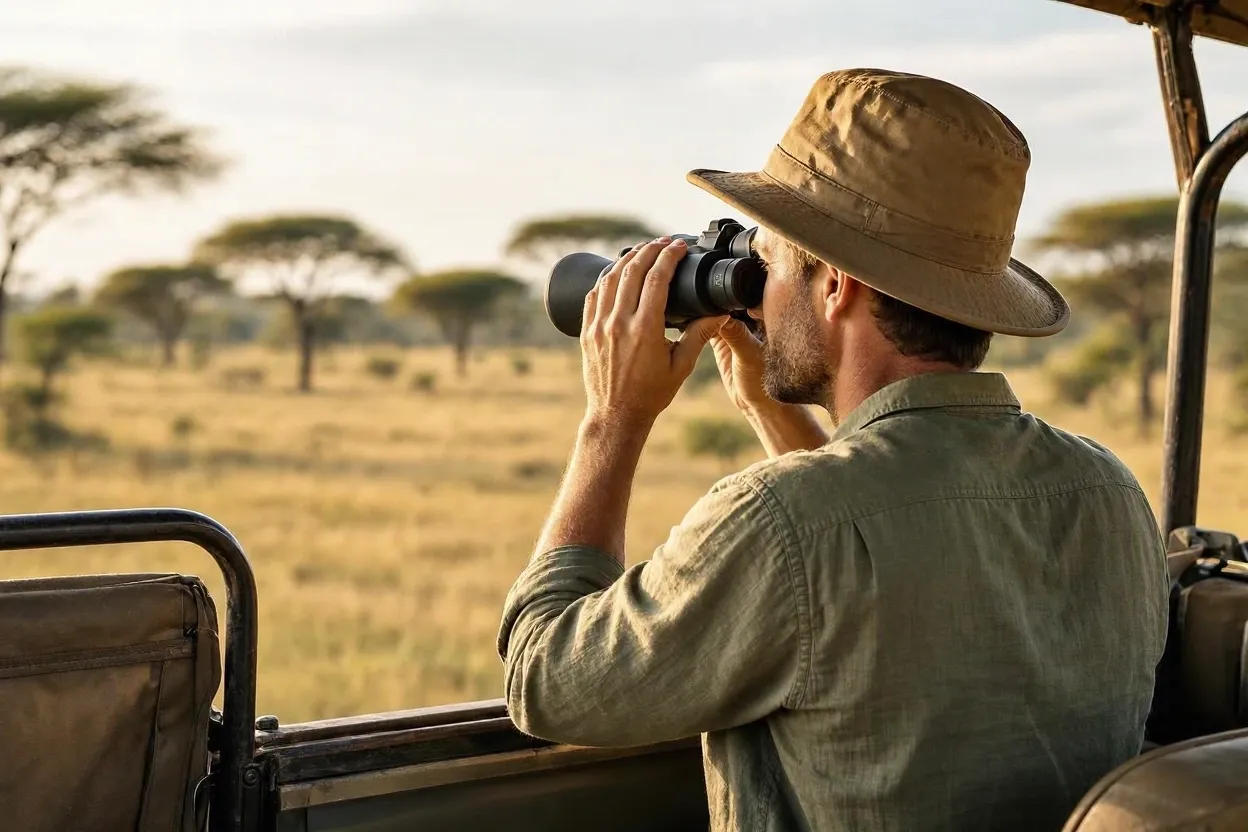
Binoculars can transform your safari experience.
Not every animal will be standing beside the road. You might spot a leopard resting in a distant tree, an eagle perched on a branch or a lion hidden in tall grass. Binoculars help you appreciate the details you'd otherwise miss.
They're particularly useful for birdwatching, spotting animals across open plains and observing wildlife without needing to get closer.
Travelling with children? Give them their own pair if possible. Kids often love scanning the landscape and being the first to spot something.
A good pair of binoculars can become one of the most-used items you bring.
9. Snacks and Sundowners: Ask Your Lodge What's Possible
Long game drives can stretch for several hours, and hunger has a habit of arriving at the least convenient moment!
Many lodges provide drinks and snacks during game drives, along with the much-loved tradition of a sundowner: stopping in a beautiful location as the sun sets, enjoying a drink and watching the sky change colour.
Imagine sipping something cold while elephants cross a distant river or a lion settles into the grass. Those are the moments you'll remember.
If you have a favourite snack, ask your lodge whether you can bring it along. Some operators provide everything you need, while others may have restrictions on food and drinks in vehicles.
The same applies to alcohol. Don't assume you can bring your own beer or wine on a drive; check with the lodge first, and always follow your guide's instructions. Never leave food or packaging behind, and never feed wildlife.
10. Check the Dining Style Before Booking Your Lodge
Safari accommodation isn't only about the wildlife. The food and dining experience can be a highlight in their own right.
Some lodges offer beautifully prepared à la carte meals, allowing you to choose exactly what you'd like to eat. Others provide set menus, family-style dining or buffets.
There is no universally better option. A buffet can be excellent, particularly for families with different tastes, while à la carte dining may feel more intimate and personalised.
If food is important to you, ask about the dining style before booking. You can also discuss dietary requirements, children's menus, private dining and special occasions in advance.
And if you're celebrating a birthday or anniversary, tell your safari specialist. A bush dinner beneath the stars can be an unforgettable surprise.
11. Pack a Small Medical Kit
Let's be honest: an upset stomach is not how anyone wants to spend a safari!
A small travel medical kit can be useful. Consider bringing your usual personal medication, oral rehydration salts, plasters, insect repellent, sunscreen and any other essentials recommended by your healthcare professional.
An over-the-counter medicine such as loperamide (Imodium) may help manage diarrhoea in some circumstances, but it isn't suitable for every situation. Follow the label and medical advice, and don't use it as a substitute for appropriate treatment. If diarrhoea is accompanied by blood or fever, seek medical advice rather than simply trying to suppress the symptoms.
Hydration is especially important in hot weather.
If you have a medical condition, allergies or medication you rely on, carry enough for the trip and keep essential medication in your hand luggage.
12. How Much Cash Should You Bring?
You generally don't need to travel with large amounts of cash. Cards are accepted at many lodges, shops and restaurants, although acceptance varies, especially in remote areas.
Cash can be useful for tipping guides, trackers, drivers and lodge staff, as well as for smaller purchases or places where card facilities are unavailable.
Before departure, ask your Adventis travel specialist about customary tipping guidelines for your itinerary. Practices differ between countries, lodges and roles, so it's better to have a realistic estimate than to guess.
Carry a little extra for unexpected situations, but keep cash secure and avoid displaying large amounts.
Also check which currency is most useful at your destinations. A multi-country safari may involve different currencies and different payment arrangements.
13. Build a Good Relationship With Your Guide
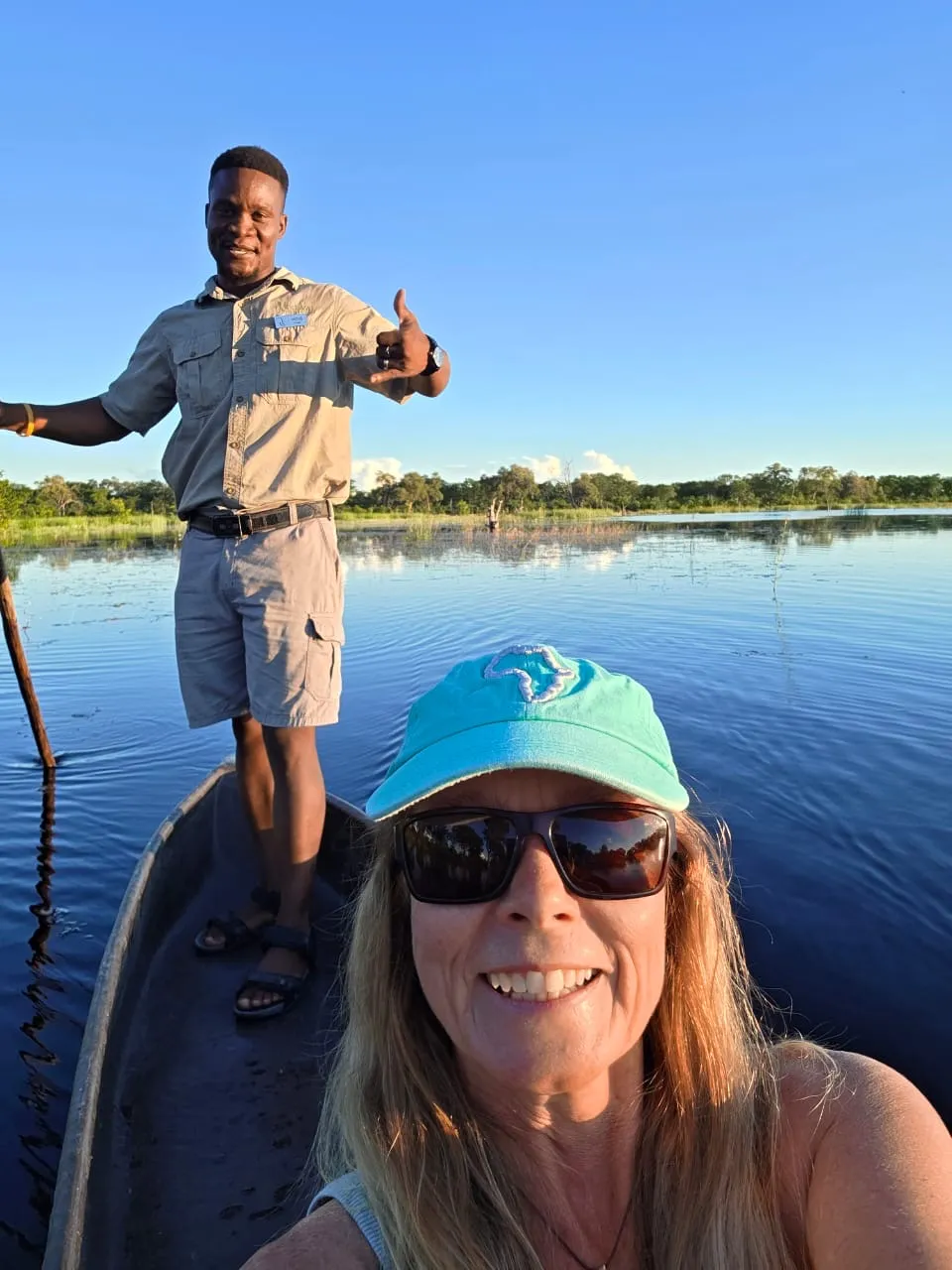
Your guide can make an enormous difference to your safari.
A great guide doesn't simply drive around looking for animals. They interpret tracks, explain animal behaviour, identify birds, understand the landscape and help you notice details you might otherwise miss.
Tell your guide what interests you. Perhaps you're passionate about elephants, fascinated by birds or hoping to photograph a leopard. If you're travelling with children, let them know what will keep the kids engaged.
Ask questions, listen to their knowledge and show appreciation for their work.
And if tipping is customary, a thoughtful tip is a lovely way to recognise excellent service. Just remember that guides must work within park rules and wildlife-safety guidelines. Never pressure them to approach animals too closely or take unnecessary risks.
14. Embrace African Time. Build Flexibility Into Your Itinerary.
Safari life operates differently from a tightly scheduled city holiday.
A game drive might take longer than expected because you've found a leopard with her cubs. A road may be slower than anticipated, a flight may be delayed, or weather may affect a transfer.
This is part of travelling through remote wilderness areas, where logistics can be affected by distance, infrastructure and natural conditions.
Build breathing room into your itinerary, especially when connecting between lodges, catching international flights or travelling by small aircraft. Where possible, avoid planning an important international departure immediately after a series of remote transfers.
Bring a book, enjoy a coffee, order a drink at the lodge or simply sit and listen to the bush.
Some of the most memorable safari moments happen when you stop trying to control every minute.
15. Step Outside the Lodge Bubble
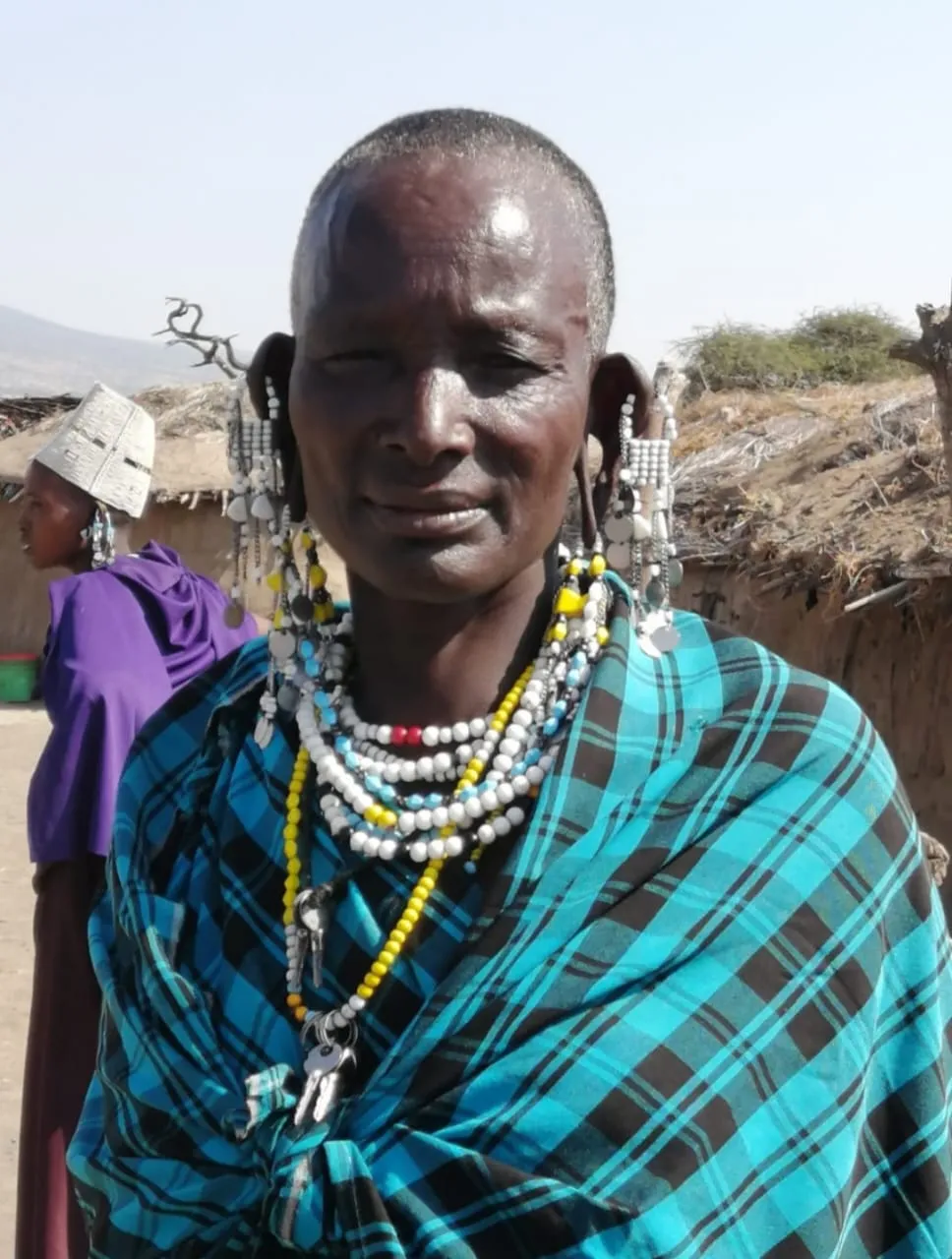
Luxury lodges can be wonderful, but Africa is so much richer than the beautiful places where you sleep.
If the opportunity arises, explore local towns, markets, craft studios and community-led cultural experiences. Learn about the region's history, listen to people's stories and discover the traditions that shape everyday life.
A guided visit with a knowledgeable local host can give you insights you wouldn't gain from a game drive alone.
If you choose to visit a local restaurant or bar, ask your lodge or guide for recommendations and advice on getting there safely. Be respectful when taking photographs, ask permission and support local businesses where you can.
Travel becomes more meaningful when you connect with the people who call a destination home.
16. Go on That Game Drive, Even When You're Tired!
You've just arrived after a long flight. You're tired, your room looks inviting, and all you want to do is shower and sleep.
Then comes the invitation: the afternoon game drive is about to depart.
If you're well enough and your guide agrees it's sensible, go!
Safari drives often take place in the early morning and late afternoon because these cooler periods can be excellent for wildlife activity. Your first afternoon could bring an extraordinary sighting: elephants at a waterhole, a leopard emerging from the bush or a lion calling across the plains.
Of course, if you're genuinely unwell or dangerously exhausted, rest. You don't need to push yourself to enjoy a safari.
But if it's simply the temptation of a comfortable bed, freshen up, grab your jacket and head out. You never know what the wilderness has waiting for you.
17. Don't Skip the Boat Safari
If your itinerary offers a boat safari, it's well worth considering.
From the Chobe River in Botswana to waterways in the Okavango Delta and selected parts of East Africa, boat excursions offer a completely different perspective on wildlife.
Elephants may come down to drink, hippos surface nearby, crocodiles rest along the banks and birds hunt over the water. Seeing animals from water level can be every bit as memorable as watching them from a 4x4.
Of course, the experience depends on the destination, season and water levels. Not every safari region has suitable boating opportunities.
Our advice: If your itinerary includes a river or lake with excellent wildlife viewing, try to make room for a boat excursion. It can be one of the highlights of your trip.
18. Take a Hot-Air Balloon Safari
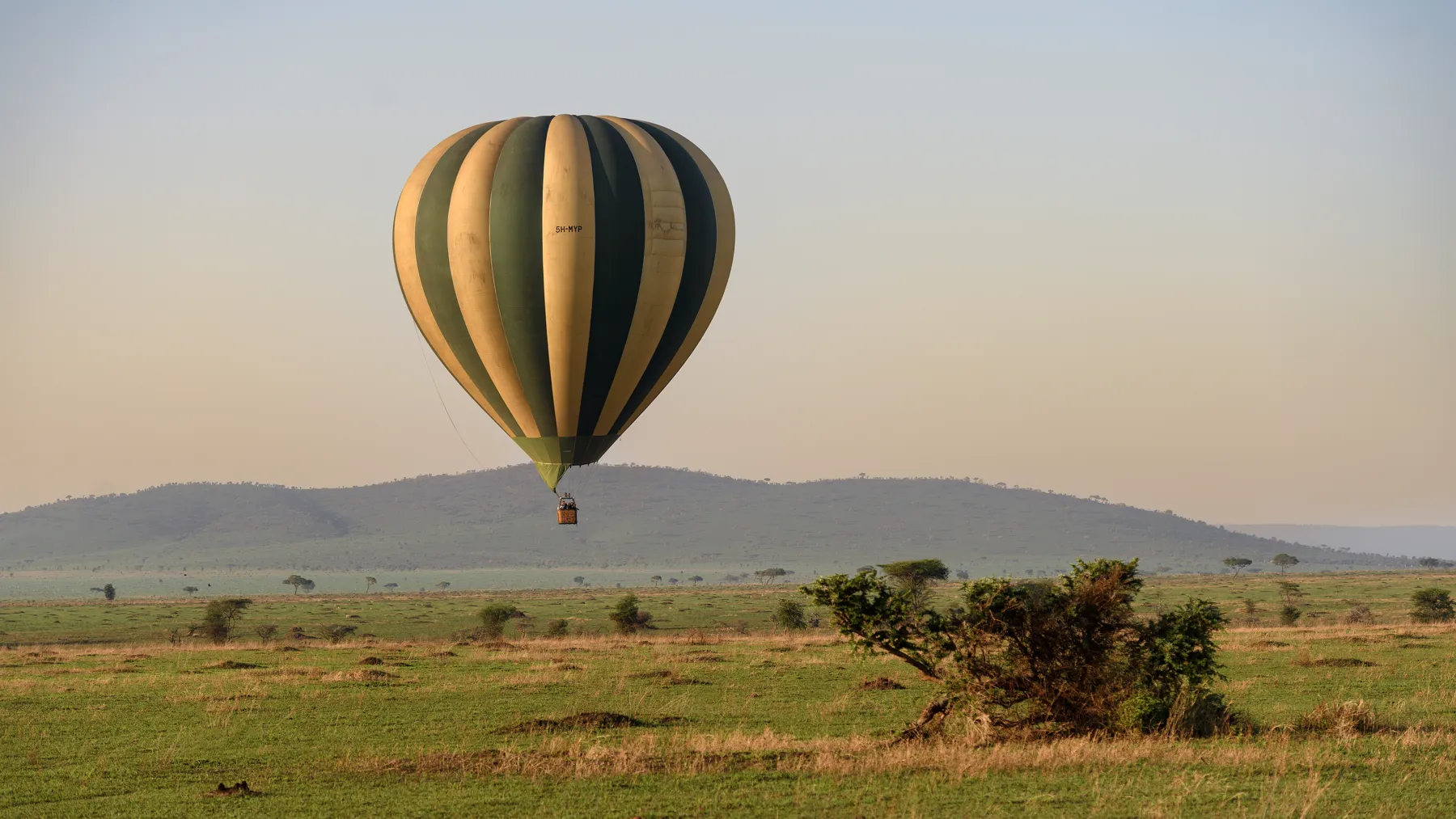
If your budget allows, a hot-air balloon safari is an extraordinary experience.
Imagine taking off before sunrise, floating quietly over the plains as the landscape slowly turns gold. Below you, herds of wildebeest and zebra move through the grasslands, while the rising sun reveals just how vast the wilderness really is.
There is something special about seeing Africa from above. Without the engine noise of a vehicle, you can appreciate the scale and patterns of the landscape in a completely different way.
The Serengeti and Maasai Mara are particularly famous for balloon safaris, although availability depends on the location and season.
These experiences usually come at an additional cost and are weather-dependent, with strict safety procedures and operator requirements.
For a special occasion or a once-in-a-lifetime trip, it's an experience worth considering.
19. Appreciate Every Animal, Not Just the Big Five
It's easy to arrive on safari with a checklist: lion, leopard, elephant, rhino and buffalo. And of course, seeing all five can be thrilling.
But don't let the checklist become the entire experience.
Watch the weaverbirds building their nests. Notice the tiny dung beetle pushing its prize across the track. Observe the giraffe's unusual gait, the way elephants communicate or how a herd of zebras moves together.
Every species has a role in the ecosystem, and every sighting offers a chance to learn something new.
Some of the most remarkable moments are not dramatic predator encounters at all. They might be a baby elephant playing, a beautiful bird in flight or the silence that settles over the bush at sunset.
Stay curious. Slow down. Let your guide teach you.
The more you notice, the richer your safari becomes.
20. Put the Camera Down. Be Present.
Of course you'll want photographs. Africa is extraordinarily beautiful, and you'll want to remember what you saw.
But don't spend the entire safari looking through a screen.
It's tempting to photograph every lion, elephant and sunset. Yet sometimes, by the time you've adjusted your settings, checked the screen and taken twenty pictures, you've missed the very moment you wanted to capture.
Take your photographs, then put the camera down. Watch the animal's behaviour. Listen to the sounds around you. Notice how the light changes across the landscape.
If photography is especially important to you, consider hiring a professional wildlife photographer or arranging a dedicated photographic experience, where available. Some lodges and operators can also help you capture family photographs during the trip.
You don't need a professional photographer to be present, of course. Sometimes one photograph is enough.
The best memories aren't always the ones on your camera roll. They're the moments you were fully there to experience.
One Last Tip: Make Your Safari Your Own
There is no single perfect way to experience Africa. Some travellers dream of tracking big cats across the savannah, others want to explore on foot, and some want to combine wildlife with beaches, cultural experiences and meaningful ways to give back.
At Adventis, we believe your safari should be designed around what matters most to you. Whether you're travelling as a family, celebrating a special occasion or planning an adventure with a deeper purpose, we'll help you choose the right destinations, experiences and lodges for your travel style.
Because a safari isn't just about the animals you see. It's about the moments you share, the connections you make and the stories you bring home.
Ready to plan your African adventure?